

ECLAC

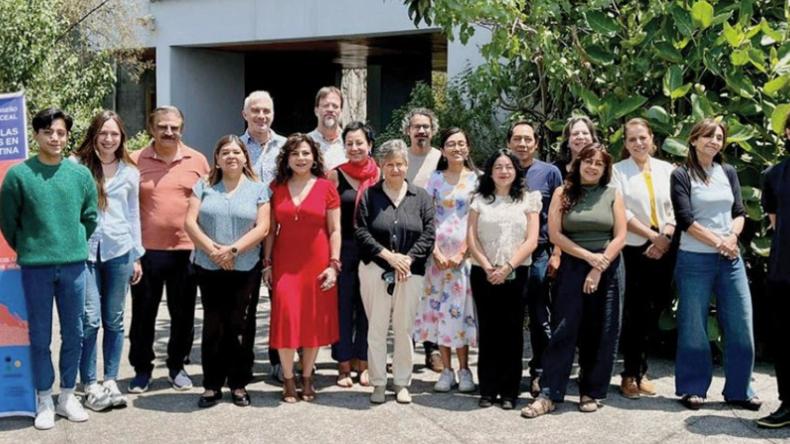
OCEAL is envisioned as a regional academic observatory and research platform. It will collect, integrate and analyse data on higher education, research, territorial and socio-environmental dimensions, and biodiversity, in order to contribute to the design of evidence-based public policies in Latin America.
OCEAL will operate as an initiative and digital platform for scientific and technical collaboration. Its focus will be to gather, integrate and analyse the knowledge, capacities, gaps and strengths in the ecological sciences in Latin America and the Caribbean.
Participants agreed that OCEAL will have a Latin American regional scope, strengthening a perspective from the South and for the South. It will be inter-institutional and multilevel, connecting universities, academic networks, scientific societies, public research centres, partner institutions and a potentially wide range of users.
The Observatory will have flexible participation mechanisms and horizontal coordination. At the same time, it will preserve the academic autonomy, plurality, and institutional and disciplinary perspectives of its member organizations, with the support of regional and international bodies.
In its first stage, the initiative will create an interoperable space with a catalogue of data sources related to strategic areas such as biodiversity and territory, governance and institutions, and knowledge capacities, among others. This will make it possible to identify what information exists, who produces it and where it is available. The repository will be developed by UNAM’s Directorate General of University Repositories, which will provide the hosting infrastructure.
The workshop was organized in thematic sessions with guiding questions and open space for discussion and reflection. The aim was to agree on a mission and vision, identify key concepts, the main users, stakeholders and partners, and types of resources, and estimate the Observatory’s potential impact. ECLAC participated actively in these sessions. Among other contributions, it put forward elements for an explicitly integral vision that does not leave the socioeconomic dimension behind. It also proposed harmonization (linked to interoperability, coherence and a shared regional vision) and biodiversity governance and institutions as inherent elements of OCEAL.
The workshop was organized by the Latin American Ecology Network (ReLatE) and the National Autonomous University of Mexico (UNAM). It was jointly promoted by the University Seminar on the History, Philosophy and Studies of Science and Medicine (SUHFECIM), the University Seminar on Evolution (SUE) and the University Seminar on Society, Environment and Institutions (SUSMAI).